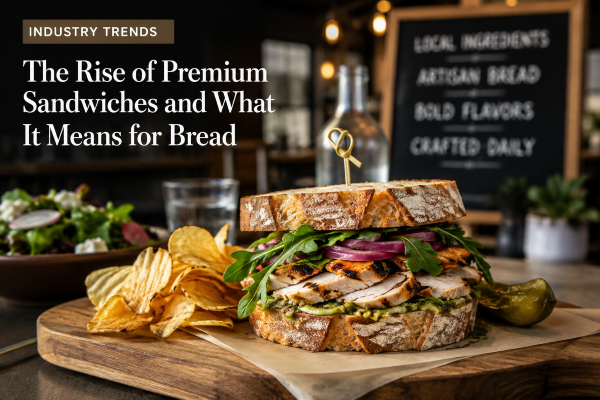
The humble sandwich is getting an upgrade.
Across cafés, restaurants, bakeries, and fast-casual concepts, sandwiches are increasingly being treated as thoughtfully composed menu items rather than simply convenient meals. Chefs are pairing slow-roasted meats, premium cheeses, fresh vegetables, house-made spreads, and globally inspired flavors to create sandwiches that command attention—and often a higher menu price.
But there is one ingredient that can determine whether all those premium components come together successfully: the bread.
As consumer expectations for sandwiches evolve, restaurants and foodservice operators are discovering that bread is no longer just a vehicle for the ingredients. It has become an important part of the overall dining experience.
The Sandwich Is Becoming a Premium Menu Item
Sandwiches have always offered restaurants a combination of familiarity, versatility, and convenience. What is changing is the level of attention being given to their ingredients and presentation.
Today’s premium sandwiches might feature:
- Slow-roasted or smoked meats
- Freshly prepared vegetables
- Specialty and aged cheeses
- House-made sauces and spreads
- Pickled or fermented ingredients
- Locally inspired flavors
- International flavor combinations
- Artisan and specialty breads
Instead of building a sandwich around inexpensive ingredients and standard bread, operators are increasingly thinking about the entire composition.
That creates an opportunity for bread to contribute flavor, texture, appearance, and perceived quality.
Bread Is Part of the First Impression
Before a customer tastes a sandwich, they see it.
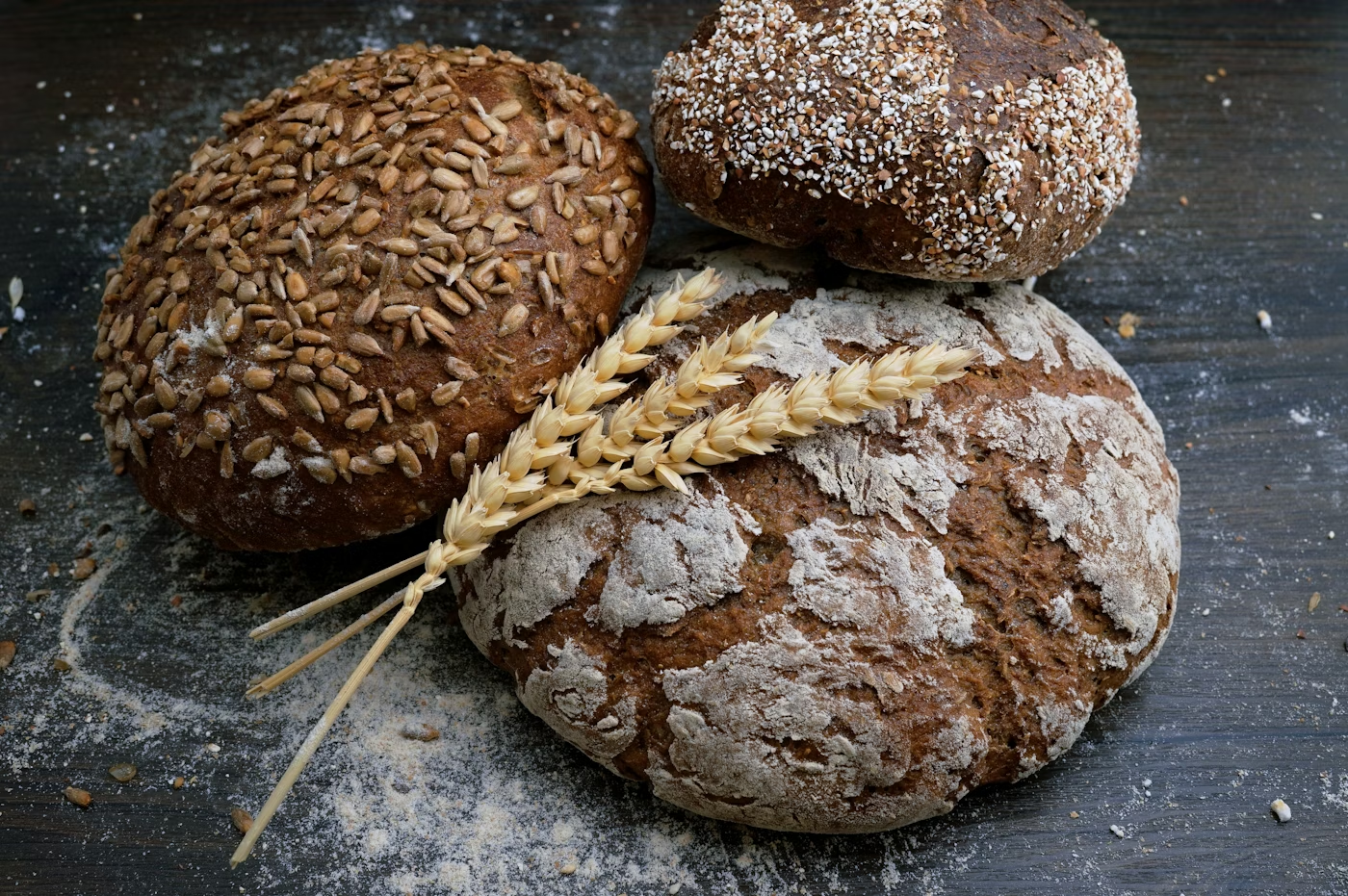
A beautifully baked ciabatta, rustic sourdough, seeded roll, or golden baguette immediately communicates something different than a standard sliced loaf.
The shape, scoring, crust, flour dusting, seeds, and crumb structure all contribute to presentation.
This becomes particularly important as restaurants compete not only on the plate but also through photography and social media. Visually distinctive sandwiches are more likely to stand out on menus, websites, delivery platforms, and social feeds.
For many premium sandwiches, the bread effectively becomes the frame around everything the kitchen has created.
Texture Matters as Much as Flavor
A great sandwich needs contrast.
A crisp crust surrounding a tender crumb can provide a completely different eating experience from uniformly soft bread. Likewise, toasted bread can introduce another layer of aroma and texture that complements warm proteins, melted cheeses, and sauces.
The ideal bread depends heavily on the sandwich.
A crusty baguette might work beautifully with sliced meats and sharp cheeses, while a softer artisan roll may be better suited to a large burger or heavily filled sandwich.
Ciabatta’s open structure can work well with grilled vegetables, meats, and flavorful spreads. Sourdough can introduce acidity that balances rich ingredients.
There isn’t one perfect bread for every sandwich.
The opportunity is in matching the bread to the ingredients.
Structure Has Become Increasingly Important
Premium sandwiches often contain more ingredients—and more moisture.
Sauces, tomatoes, pickled vegetables, melted cheese, roasted meats, and dressings can quickly overwhelm bread that isn’t designed to support them.
Good sandwich bread needs enough structure to hold those ingredients without becoming difficult to eat.
Operators should consider several practical characteristics:
Crust strength: Is the crust strong enough to contain the sandwich without becoming excessively tough?
Crumb structure: Will the interior absorb sauces while maintaining its integrity?
Slice thickness: Is the bread substantial enough for the ingredients being used?
Moisture resistance: How does the bread perform several minutes after assembly?
Compression: Does the sandwich remain manageable when a customer takes a bite?
These details become even more important for takeout and delivery, where a sandwich may sit for 15, 30, or even 45 minutes before being eaten.
Artisan Bread Adds Flavor of Its Own
Bread doesn’t have to be neutral.
Long fermentation, sourdough cultures, whole grains, seeds, specialty flours, and different baking techniques can introduce flavors that complement the rest of a sandwich.
A mildly tangy sourdough can cut through rich meats and cheeses.
A seeded multigrain bread can add nuttiness and texture to vegetable-forward sandwiches.
A rustic Italian-style loaf can complement olive oil, cured meats, mozzarella, and roasted vegetables.
Even a simple sandwich can feel considerably more distinctive when the bread contributes to its flavor profile.
That means chefs can begin thinking about bread the same way they think about sauces, cheeses, or condiments: as another opportunity to build flavor.
Premium Bread Can Support Premium Positioning
Customers don’t evaluate menu pricing based on food cost calculations. They evaluate what they see, taste, and experience.
Bread can play a surprisingly large role in that perception.
Consider the difference between presenting the same ingredients on standard sliced bread versus a visually distinctive artisan loaf or roll. Even before the first bite, the second option can communicate craftsmanship and quality.
For restaurants trying to create a premium sandwich program, upgrading the bread can therefore have an impact beyond flavor.
It can reinforce the positioning of the entire menu item.
Consistency Still Matters
Artisan appearance doesn’t eliminate the operational realities of running a restaurant.
For a bread program to work successfully, operators also need consistency.
Bread should arrive with predictable:
- Size
- Weight
- Shape
- Texture
- Flavor
- Slicing characteristics
- Storage requirements
- Preparation performance
Consistency becomes particularly important for multi-location restaurants.
A sandwich photographed and developed at one location should ideally look and perform similarly when ordered somewhere else.
That makes the relationship between restaurants, bakeries, and distributors especially important.
Delivery Is Changing Bread Requirements
The growth of takeout and delivery has created another challenge for sandwich programs.
A sandwich that tastes excellent immediately after preparation may perform very differently after sitting inside packaging.
Steam can soften crusts. Sauces can migrate into the crumb. Hot ingredients can create condensation. Cold vegetables can change the temperature and texture of surrounding ingredients.
Restaurants developing premium sandwiches should test them under real-world conditions.
Prepare the sandwich exactly as it would be for a customer, package it, wait the typical delivery time, and then evaluate it.
The results can reveal whether changes are needed to the bread, preparation method, ingredient placement, or packaging.
Different Sandwiches Need Different Breads
One of the biggest opportunities for restaurants is moving away from the idea that every sandwich needs to use the same bread.
A thoughtfully designed menu might use several bread styles strategically.
For example:
Sourdough
Excellent for grilled sandwiches, premium deli combinations, and rich ingredients that benefit from acidity.
Ciabatta
Well suited to grilled vegetables, chicken, Italian-inspired sandwiches, and sandwiches featuring oils or spreads.
Baguettes
Ideal for sandwiches where a crisp crust and substantial chew are part of the experience.
Brioche-style rolls
Useful for burgers, breakfast sandwiches, and applications where a softer, richer bread complements the filling.
Whole-grain and seeded breads
A strong choice for vegetable-forward, breakfast, and health-conscious menu concepts.
Choosing bread intentionally allows each sandwich to develop its own identity.
Bread Can Help Differentiate a Menu
Restaurant competition is intense, and many establishments have access to similar proteins, cheeses, vegetables, and condiments.
Bread offers another opportunity to create distinction.
A recognizable bread style can even become part of a restaurant’s signature.
Customers may remember the sandwich with the exceptionally crisp ciabatta, the burger served on a distinctive artisan roll, or the grilled cheese built with thick-cut sourdough.
Those details help turn a familiar menu category into something customers associate with a particular restaurant.
What Restaurants Should Look for in a Bread Partner
As sandwiches become more sophisticated, restaurants should evaluate bread suppliers based on more than price alone.
Important questions include:
- Can the supplier provide consistent products at the volume required?
- How frequently can products be delivered?
- What are the storage requirements?
- How does the bread perform after freezing or thawing?
- Are different sizes and formats available?
- Can products work across multiple menu applications?
- How consistent are shape and portion size?
- Can the supplier support growth into additional locations?
The best solution balances quality, consistency, operational practicality, and reliable distribution.
The Future of the Sandwich Starts With Better Bread
Premium sandwiches represent a larger shift in foodservice: customers increasingly appreciate familiar foods that have been elevated through better ingredients and thoughtful preparation.
Bread has an important role in that evolution.
It provides structure. It creates texture. It contributes flavor. It affects presentation. And it can influence how customers perceive the quality of the entire sandwich.
For restaurants developing their next sandwich, the conversation shouldn’t begin only with the protein, cheese, or sauce.
It should also include a simple question:
What bread will make this sandwich better?
As premium sandwiches continue to evolve, restaurants that treat bread as an ingredient rather than an afterthought will have more opportunities to create menu items that are distinctive, memorable, and built to perform.